
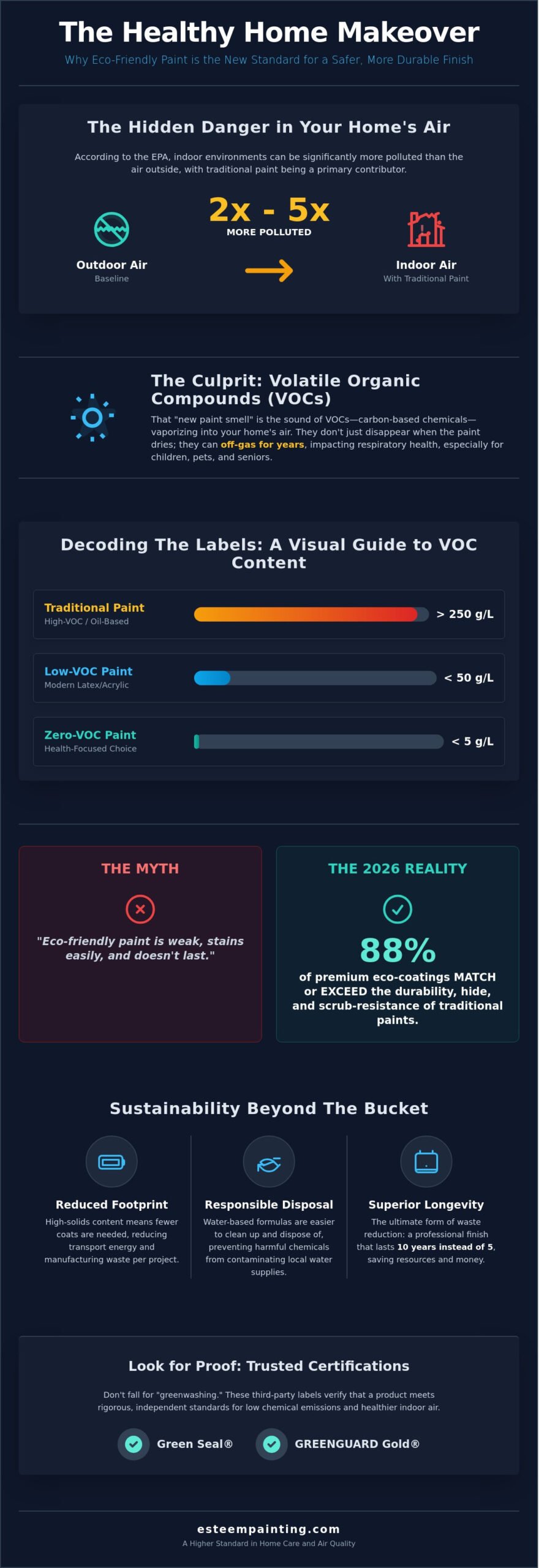
According to the Environmental Protection Agency, indoor air concentrations of certain pollutants are often 2 to 5 times higher than outdoor levels, with traditional paint fumes serving as a primary culprit. You shouldn’t have to choose between a beautiful home and the health of your family. It’s frustrating to face lingering chemical smells or worry about respiratory triggers just because you wanted to refresh your living room. You deserve a space that feels as clean as it looks. We believe in doing things the right way, not the easy way, which is why we prioritize your home’s air quality as much as its aesthetic.
This guide will show you how Eco-friendly Painting provides a meticulous, professional finish using high-performance, non-toxic coatings. These modern solutions offer the same durability as traditional products without the harmful side effects. We’ll help you cut through the confusion of “greenwashing” labels to find solutions that truly protect your children and pets. You can achieve a premium transformation while maintaining total peace of mind. We will break down the science of low-VOC materials, explain our proven process for a seamless application, and show you how to protect your most valuable asset with integrity.
Key Takeaways
- Learn how modern coatings directly impact your indoor air quality and why sustainable choices are essential for a healthy, vibrant home environment.
- Understand the science behind VOCs to confidently navigate product labels and select the safest, high-performance finishes for your living space.
- Discover why professional-grade Eco-friendly Painting no longer requires a sacrifice in durability, offering meticulous results that stand the test of time.
- Explore the meticulous “Esteem Way” of surface preparation, ensuring a seamless application that protects both your family’s health and your home’s value.
- Identify the critical questions to ask a potential contractor to ensure they possess the specialized expertise and integrity required for eco-conscious projects.
What is Eco-friendly Painting and Why Does it Matter in 2026?
Eco-friendly Painting is no longer a niche specialty or a compromise on quality; it’s a meticulous standard for modern home care. This approach represents a holistic commitment to coatings that prioritize human health and ecological balance throughout their entire lifecycle. To understand this shift, we must look at the Environmental impact of paint, which historically involved heavy metals and high-solvent content that lingered in the atmosphere long after the brushes were cleaned. By 2026, chemical engineering has advanced so significantly that 88% of premium architectural coatings now match or exceed the durability of traditional oil-based products.
The performance gap that once frustrated homeowners has vanished. Modern sustainable paints offer exceptional hide, scrub-resistance, and color retention. We rely on third-party verifications like Green Seal or GREENGUARD Gold to ensure every gallon meets rigorous emissions standards. This transparency allows us to provide a seamless transformation for your home while maintaining the highest standards of integrity. Choosing these materials isn’t just about being “green,” it’s about selecting the most advanced technology available for your walls.
The Impact of Paint on Your Household Health
The familiar “new paint smell” is actually the sound of Volatile Organic Compounds (VOCs) escaping into your living space. These chemicals can off-gas for years, potentially affecting the respiratory health of children, seniors, and pets. Our interior painting process addresses this problem by utilizing coatings that minimize these irritants. Choosing low-emission products creates a safer environment for those with asthma or chemical sensitivities. Indoor Air Quality (IAQ) is the primary driver for non-toxic painting choices in 2026. We believe your home should be a sanctuary, and protecting your air quality is a fundamental part of our craftsmanship.
Sustainability Beyond the Bucket
True sustainability considers the entire journey of a product, from raw material extraction to responsible disposal. Modern eco-friendly paints often utilize bio-based resins or recycled content to reduce reliance on petroleum-based ingredients. According to Environmental Protection Agency reports, indoor air can be 2 to 5 times more polluted than outdoor air, largely due to building materials and poor ventilation. We solve this by selecting products that don’t contribute to this toxic load.
- Reduced Carbon Footprint: High-solids content means fewer coats and less transport energy per project.
- Responsible Disposal: Eco-friendly formulas are often easier to recycle or dispose of without contaminating local water supplies.
- Longevity: We prioritize durability because a finish that lasts 10 years instead of 5 is the ultimate form of waste reduction.
Professional painters lead this shift because we understand that high-quality, sustainable materials provide a beautiful finish and long-term value. We treat your home as a valuable asset that deserves the most responsible care available. This disciplined approach ensures that your renovation is a source of pride, not just for its beauty, but for the legacy it leaves behind.
The Science of VOCs: Decoding Labels and Certifications
Volatile Organic Compounds, or VOCs, are carbon-based chemicals that easily vaporize at a standard room temperature of 68°F. These substances are responsible for that pungent “new paint smell” that lingers long after the brushes are cleaned. In the context of Eco-friendly Painting, understanding these compounds is vital because they don’t just disappear once the paint dries. They continue to off-gas into your living space for years. Choosing a product with low or zero VOCs isn’t just about air quality during the project; it’s about the long-term health of your home environment.
Homeowners often feel confused by the different tiers of “green” paint. Low-VOC paints typically contain fewer than 50 grams per liter (g/L), while Zero-VOC paints must contain fewer than 5 g/L according to federal standards. Natural or plant-based paints go a step further, utilizing ingredients like milk protein, citrus oil, or clay. However, a common pitfall occurs at the mixing station. Standard colorants often contain high levels of VOCs. If you add traditional pigments to a Zero-VOC base, the final product is no longer “zero.” To maintain integrity, we recommend verified systems like Benjamin Moore’s Gennex colorant system, which remains Zero-VOC even after tinting.
Identifying truly safe products requires looking past marketing claims. You should prioritize labels like GREENGUARD Gold, which tests for over 360 chemicals and strictly limits total emissions. GreenSeal GS-11 is another rigorous standard that evaluates performance alongside environmental impact. For a comprehensive list of trusted benchmarks, you can consult the EPA recommendations for paint to see which ecolabels meet federal procurement guidelines. These certifications ensure you aren’t just buying a “green” label, but a product that has been scientifically vetted for safety.
Common Chemicals to Avoid in Interior Coatings
We advise clients to watch for “The Big Three”: Benzene, Formaldehyde, and Toluene. These hazardous air pollutants were linked to “Sick Building Syndrome” in a landmark 1984 World Health Organization report. Exposure to these chemicals over time can lead to respiratory issues and headaches. To combat this, the industry has seen a meticulous transition toward water-based alkyd resins. These modern coatings offer the durability of old-school oil paints without the toxic chemical profile, providing a seamless finish that protects both your walls and your family’s health.
How to Read a Paint Can Label Like a Pro
Don’t let “greenwashing” phrases like “all-natural” or “eco-safe” distract you from the technical data. Flip the can over and look for the VOC content listed in grams per liter (g/L). A professional-grade choice like Benjamin Moore Eco Spec sets the industry standard by offering 0 g/L emissions and zero odors. If a label doesn’t clearly disclose its chemical makeup or its g/L rating, it’s likely not the best fit for a health-conscious home. If you’re planning a project and want to ensure the safest materials are used, our team can guide you through the selection process for your interior painting needs.
Performance and Durability: Debunking the Eco-friendly Paint Myth
The most common concern homeowners share with our team is whether choosing a sustainable option means repainting sooner. Many worry that eco-friendly painting products lack the “bite” to stick to surfaces or will fade after a single season of intense sunlight. This skepticism stems from early 2000s formulations that occasionally struggled with adhesion. However, the industry has undergone a massive transformation. Modern non-toxic paints utilize advanced plant-based binders and mineral pigments that create a finish as tough as any traditional oil-based alternative.
High-quality eco-paints often boast a higher percentage of volume solids, sometimes exceeding 45%. This concentration means more protective material stays on your walls and less evaporates into the air. While a standard gallon of “contractor grade” paint might require three coats to hide a dark color, a premium zero-VOC product often achieves a seamless finish in just two. This efficiency saves time and reduces the total volume of product needed for your project. To better understand the technical shift in these formulas, Green Seal’s guide to VOCs details how manufacturers have successfully removed harmful solvents while maintaining film integrity.
Traditional vs. Eco-friendly: A Side-by-Side Comparison
When we examine the data, the performance gap has vanished. Modern eco-paints offer drying times of 30 to 60 minutes, allowing for faster project completion without the lingering chemical odor that disrupts your home life. Natural mineral paints also offer superior breathability. They allow moisture to pass through the paint film rather than trapping it, which reduces the likelihood of paint bubbling or mold growth by up to 20% in humid climates. Professional-grade zero-VOC paints now match or exceed the durability of standard latex options.
Specialized Applications: Cabinets and High-Moisture Areas
Durability is especially critical for high-traffic surfaces. For homeowners considering cabinet refinishing, eco-friendly waterborne alkyds provide a factory-hard finish that resists the oils from hands and frequent cleaning. In bathrooms or laundry rooms, we select antimicrobial low-VOC paints designed to thrive in high-moisture environments. Success in these areas relies on the “Esteem Way,” which includes using specialized blocking primers. These primers seal the substrate meticulously, ensuring the sustainable topcoat bonds perfectly and resists stains for years to come.
The Professional Process: Achieving a Seamless Eco-friendly Finish
A beautiful result starts long before the first drop of paint touches the wall. At Esteem Painting, we believe surface preparation accounts for 90% of a project’s success. We don’t just cover up old surfaces; we revitalize them using the “Esteem Way.” This methodology ensures your home remains a healthy sanctuary throughout the entire transformation. Even when we utilize zero-VOC products, our team maintains rigorous standards for air purity and meticulous application to ensure your Eco-friendly Painting project stands the test of time.
Preparation: The Foundation of Quality
A healthy home strategy often begins with wallpaper removal. Old adhesives can harbor mold or trap allergens behind the paper, so we strip these layers carefully to reveal a clean slate. To keep your indoor air pristine, we use dustless sanding systems equipped with HEPA filtration. These industrial-grade vacuums capture 99.97% of airborne particles as small as 0.3 microns. We also repair drywall using specialized low-dust compounds. These materials are designed to settle quickly rather than floating through your living space, ensuring a truly clean environment from start to finish. For a deeper look at how this critical step protects your home’s equity, our guide to professional drywall repair explains the technical precision required for a perfectly smooth substrate.
Choosing the Right Sheen for Each Room
Selecting the correct finish is about more than just aesthetics; it impacts how you live in your space. Sheen levels change how light bounces off a wall and how easily you can wipe away a smudge. We guide you through this selection process to find the perfect balance for your lifestyle.
- Matte: This finish is best for low-traffic areas like master bedrooms. It hides wall imperfections by absorbing light rather than reflecting it.
- Eggshell: A versatile choice for living rooms and hallways, offering a soft glow and better scrubbability than matte.
- Semi-Gloss: This is the ideal choice for kitchens, bathrooms, and trim where moisture resistance and durability are vital.
Our team helps you navigate these choices by referencing The Best Interior Paint Brands of 2026 to find the most durable, sustainable options available. We prioritize coatings that offer maximum adhesion and sheen consistency.
Proper ventilation remains a priority during every Eco-friendly Painting project. We set up strategic cross-ventilation fans to ensure fresh air circulates even when we use odorless, zero-VOC coatings. This disciplined approach eliminates the “new paint smell” and helps the paint cure properly. We take pride in doing things the right way, not the easy way, to protect your family and your most valuable asset.
If you’re ready for a stress-free home transformation that prioritizes your health, contact us for a professional consultation today.
Investing in Integrity: Choosing an Eco-friendly Painting Partner
Selecting a partner for your home improvement project is about more than just finding someone who can handle a brush. When your priority is a healthy living environment, hiring a specialist in residential painting services ensures that every product used meets strict environmental standards. General contractors might overlook the nuances of VOC (Volatile Organic Compound) levels, but an expert understands how these chemicals impact indoor air quality for years. Professional expertise ensures that your Eco-friendly Painting project doesn’t just look good on day one, but remains safe and vibrant for the long haul.
Before signing a contract, you should vet your professional’s experience with sustainable materials. Ask these specific questions to ensure their standards align with yours:
- Can you provide technical data sheets for the low-VOC or zero-VOC paints you use?
- What specific disposal methods do you use for leftover materials and wash water?
- How do you manage dust and debris during the preparation phase to protect indoor air quality?
- Have you completed similar projects where environmental health was the primary goal?
A “stress-free experience” is the cornerstone of a successful transformation. We believe that integrity in craftsmanship means doing things the right way, not the easy way. This commitment translates to meticulous surface preparation, which often accounts for 75% of the total labor in a high-quality job. By focusing on these details, we protect your home as if it were our own, providing the peace of mind that comes from knowing every step follows a proven, disciplined process. When evaluating contractors, it’s essential to understand the full scope of what professional interior house painters bring to your project beyond just applying paint.
The Long-term Value of Eco-friendly Painting
Sustainability is a financial asset. High-quality, sustainable upgrades can increase a home’s resale value by up to 7% compared to standard renovations. Durable, non-yellowing finishes mean you won’t need to repaint as frequently, which reduces maintenance costs over a 10-year period. Beyond the numbers, there’s an emotional reward. Living in a space that feels as good as it looks creates a sense of pride and well-being that only true craftsmanship can deliver.
Ready for a Healthy Transformation?
Getting a professional estimate is the first step toward a more beautiful, sustainable home. The Esteem Painting team remains dedicated to community health and the highest standards of our trade. We don’t just apply paint; we build relationships based on honesty and results. If you’re ready to see the difference that integrity makes, schedule your professional consultation today. Let’s work together to create a space that reflects your values and protects your family’s future.
Invest in a Healthier, More Beautiful Home
Choosing Eco-friendly Painting isn’t just a design choice for 2026; it’s a long-term investment in your family’s wellness and your home’s integrity. You’ve learned that modern zero-VOC coatings provide the same professional durability as traditional paints without the lingering chemical odors. By focusing on high-standard certifications, you’re ensuring a seamless finish that protects your indoor air quality for years to come. A beautiful home should feel as good as it looks.
At Esteem Painting, we bring over 16 years of meticulous craftsmanship to every project we touch. We’ve developed a proven process that prioritizes health-focused solutions, specializing in low-VOC and zero-VOC applications that never compromise on quality. Our team takes pride in being the reliable experts who treat your property with the respect it deserves. We’re here to guide you through a stress-free transformation that emphasizes both sustainability and superior results.
Take the first step toward a vibrant, healthy living space. Book Your Stress-Free Eco-friendly Painting Consultation today. We’re excited to show you how beautiful integrity can be.
Frequently Asked Questions
Is eco-friendly paint more expensive than traditional paint?
Premium eco-friendly paints often carry a 15% to 25% higher price tag than standard contractor-grade options. This investment reflects higher-quality resins and pigments that provide better coverage and longevity. According to a 2023 industry report by Grand View Research, the demand for sustainable coatings is driving innovation that narrows this price gap over time. You’ll often find that the superior hide of these paints reduces the number of coats required, which saves on labor costs.
Does zero-VOC paint really have no smell at all?
Zero-VOC paint isn’t completely odorless, but it lacks the harsh chemical off-gassing scent associated with traditional solvents. While the EPA standard for zero-VOC is less than 5 grams per liter, a faint smell from ingredients like binders or pigments may persist for 24 hours. Most homeowners report a 90% reduction in odor compared to standard latex paints. This allows you to return to your living space the same day the project concludes without respiratory discomfort.
Can I use eco-friendly paint for exterior surfaces like decks and fences?
Yes, specialized eco-friendly painting products are engineered specifically for the rigors of exterior wood and masonry. Modern bio-based stains and paints use plant oils rather than petroleum solvents to penetrate wood fibers. These formulas provide UV protection that matches the performance of traditional stains, often lasting 3 to 5 years before requiring a maintenance coat. We select products that meet the Master Painters Institute Green Performance standards to ensure your deck survives harsh seasonal shifts.
How long does it take for low-VOC paint to fully cure?
Low-VOC paints typically reach a dry to touch state in 1 to 2 hours, but they require 21 to 30 days to reach maximum hardness. While you can move furniture back into a room after 24 hours, the chemical bond continues to strengthen for a full month. Don’t scrub the surface or use harsh cleaners during this initial 30-day window. Following this timeline ensures the finish maintains its integrity and resists scuffs for years to come.
Is eco-friendly paint as durable as oil-based paint for cabinets?
Modern waterborne alkyd paints offer the same rock-hard finish as traditional oil-based coatings without the yellowing or toxic fumes. These hybrid formulas undergo a cross-linking process during dehydration that creates a durable barrier against grease and moisture. Tests conducted by paint manufacturers show these coatings withstand 1,000 scrub cycles, meeting the same Kitchen Cabinet Manufacturers Association standards as factory finishes. It’s a professional solution that protects your cabinetry while keeping your kitchen air clean.
Does eco-friendly paint come in the same color variety as standard paint?
You can achieve almost any color imaginable with eco-friendly painting because modern tinting systems use zero-VOC colorants. In years past, adding color often added VOCs back into the paint, but technology changed in 2010 to allow for high-performance, toxin-free pigments. Whether you choose a soft neutral or a deep navy, the color depth and lightfastness remain consistent. We use precision color-matching technology to ensure your chosen hue looks exactly as you envisioned.
What is the difference between natural paint and zero-VOC paint?
Natural paints are made from raw ingredients like clay, lime, or milk protein, while zero-VOC paints are typically water-based synthetics with the toxins removed. Zero-VOC options still rely on acrylic or vinyl binders but keep emissions below 5 grams per liter. Natural paints are biodegradable and often 100% plastic-free, making them a favorite for historic restorations. Both choices prioritize your health, but zero-VOC paints generally offer more familiar application and cleaning properties for the average homeowner.
Can eco-friendly paint prevent mold and mildew growth?
Many eco-friendly paints include natural antimicrobial agents like silver ions or zinc oxide to inhibit 99% of mold and mildew growth. These additives create an inhospitable environment for fungi without using the harsh biocides found in older paint formulas. For high-moisture areas like bathrooms, we recommend products certified by the Greenguard Environmental Institute. This proactive approach protects your home’s structural integrity and ensures your family breathes cleaner air.

Article by
Dennis Emerich
Disclaimer
The information provided on this website, including all articles, blog content, guides, and related materials, is for general informational purposes only. While Esteem Painting LLC makes reasonable efforts to ensure the accuracy and reliability of the information presented, no representations or warranties, express or implied, are made regarding the completeness, accuracy, reliability, suitability, or availability of any information contained herein.
All content is provided “as is” and may not reflect the most current industry standards, product specifications, building codes, environmental conditions, or manufacturer requirements. The information provided should not be considered professional, technical, or project-specific advice. Each property, surface condition, and project environment is unique, and outcomes may vary significantly based on factors beyond the control of Esteem Painting LLC.
Readers and users of this information are solely responsible for evaluating the accuracy, applicability, and suitability of any information for their specific situation. Any reliance placed on such information is strictly at the user’s own risk. Before undertaking any painting, surface preparation, coating application, or related work, individuals should consult with a qualified professional and/or request a formal written estimate specific to their project.
Esteem Painting LLC expressly disclaims all liability for any loss, damage, injury, or expense, including but not limited to direct, indirect, incidental, consequential, or punitive damages, arising from or related to the use of, or reliance upon, any content published on this website.
Nothing contained within this website shall be construed as creating any contractual relationship, warranty, guarantee of results, or representation of performance. Any services offered by Esteem Painting LLC are subject solely to the terms and conditions set forth in a fully executed written agreement.
This website may reference third-party products, materials, brands, or services. Such references are provided for informational purposes only and do not constitute endorsement, recommendation, or guarantee of performance. Esteem Painting LLC assumes no responsibility for the performance, suitability, or availability of third-party products or services.
By accessing and using this website, you acknowledge and agree to the terms of this disclaimer.